
5 Ecommerce Website Optimization Mistakes That Kill DTC Growth

.avif)
.avif)
.avif)
If you’re a DTC founder, you already know how this story goes.
You push creative volume. You test new hooks. You tweak bids. You refresh audiences. You fight for every incremental drop in CAC.
And still, something feels capped.
- Your ads get clicks, but the conversion rate doesn’t move
- You hit your ROAS target, but profit stays flat
- You scale spend, and efficiency erodes underneath you
At a certain stage, growth stops being about “better ads” and starts being about removing structural constraints inside your business.
At Kynship, we’ve seen this pattern play out across dozens of brands between $2M and $50M:
- We took Purdy & Figg scale from £452K to $50M in 3 years
- We 10xd WildBird’s revenue while maintaining 5 aMER, 30% CM, and 17.5% profit
- We grew Supergut’s new customer revenue 799% in 6 months (while cutting CAC 25%)
The brands that break through plateaus aren’t the ones with the flashiest creative or the highest ROAS screenshots. They’re the ones that identify the real bottleneck in their system and fix it at the root.
In this article, we’re breaking down five mistakes that silently cap DTC growth:
- Message breakage between ad and landing page
- Insufficient trust density on product pages
- AOV ceilings that limit the allowable CAC
- Structural friction that depresses CVR at scale
- A forgettable brand that makes every other lever harder
If you’re spending six or seven figures a month on paid media, these aren’t tactical tweaks. They’re financial multipliers.
Because at your stage, growth isn’t about finding a new channel.
It’s about refining the system you already have, so every click you pay for has a higher probability of generating profitable revenue.
Constraint #1: Message Breakage Between Ad and Landing Page
Many brands invest heavily in creative volume (as they should!), but don’t pay attention to the message congruence.
If the promise in the ad doesn't survive the handoff to the page, you've broken the chain. The buyer clicked because of a specific hook, offer, or angle—and a generic PDP that doesn't reflect any of that wastes the click you already paid for.
What This Costs You
Higher bounce rates on paid traffic. Suppressed CVR across your top-of-funnel campaigns. A blended aMER that's worse than it should be, given the quality of your creative. And the worst part: you might blame the ads when the problem is actually the page.
Lose even 0.5% of CVR here, and you’re tightening the range of what your cost controls can support.
How We Approach This at Kynship
At Kynship, our creative flywheel allows us to produce 300–700 creative assets per month and cycle through diverse hooks & angles every 14–21 days. With these many creatives, we don’t let our clients’ landing pages be static—we treat them as extensions of the creative.
A. Match the offer to the page at the campaign level
Different offers produce different financial outcomes—distinct AOVs, margins, and LTVs—which means each one needs its own cost controls and its own landing page.
You cannot optimize a “Buy 4, Get 4 Free” offer against the same target as a “Standard Subscription” offer. Break these at the campaign level. Run offer-specific landing pages where the only traffic source is the specific ad campaign.
We call this “testing on an island.” You test offers and landing pages in isolated environments—protecting your main revenue streams—and only bring winners to the “mainland” (your core site) once they've proven out.
B. Build creator-to-page continuity for influencer partnerships
When you run whitelisted ads with a creator, the creator’s face and content should carry through to the landing page. This continuity becomes a conversion multiplier because the social proof that drove the click is reinforced on the page.
For macro-influencer partnerships, this means dedicated landing pages. Warby Parker does this with their Emma Chamberlain collaboration—the creator, the product picks, the story, all on one page.

For micro-influencer collaborations at scale—where you're seeding 500+ creators a quarter as we do at Kynship—you can’t build a page per person. Instead, embed IGC directly on product pages so anyone landing from an ad sees the creator and discovers more social proof from others. Purdy & Figg do this right at their homepage:

Repurpose the same creator content from the ad onto the page. When the creative that drove the click also appears on-site, authenticity carries through—and conversion follows.
C. Use FERMAT (or similar) to test landing pages at creative velocity
The brands that are winning right now aren’t just testing creative. They’re testing offers and landing pages at the same velocity (and using isolated environments to do it without risking their core revenue).
We used FERMAT to create four new product bundle offers based on Southern Scholar’s best-selling sock colors: the Blue Bundle, Purple Bundle, Tan Bundle, and Green Bundle. We also hypothesized that including cross-bundle options on each landing page would allow customers to mix and match or purchase multiple bundles in a single transaction.
The results:
- 39% reduction in CAC
- 122% lift in conversion rate through optimized landing pages
- 111% increase in AOV, with most customers purchasing multiple bundles
- 33% improvement in marketing efficiency
For more on how we use FERMAT for our clients, check out this episode from our podcast below.
The Bottom Line
Landing page continuity is a spend multiplier. Every percentage point of CVR you recover by closing the ad-to-page gap directly expands how aggressively your forecast allows you to acquire. And when you combine message congruence with offer testing, you’re unlocking entirely new spend capacity.
Constraint #2: Insufficient Trust Density on Product Pages
Many founders see good quality traffic and low conversions on their ads and assume “the market is tough right now” and offer heavy discounts to close customers. But the real issue might be that your product page doesn’t finish the persuasion your ad started.
Reviews alone don’t close the gap between a high-CTR ad and an actual purchase. Today, buyers need layered validation:
- creator content
- objection handling
- social credibility
- UGC or CGC for visual reassurance
Without this, even buyers with high-intent hesitate to buy.
What This Costs You
At scale, those stalled sessions add up—you’re leaking margin on traffic that was close to converting but didn’t get the push it needed on the PDP.
It sometimes also results in invisible CVR suppression, unless you’re segmenting by traffic source. Your creative is working—the click-through rates prove it. But the page isn’t closing. High CTR with weak CVR is the clearest signal that your site—not your ads—is leaking profit.
How We Approach This at Kynship
We approach trust density from two angles: repurposing the content our creative pipelines already produce as organic-looking social proof across the site and restructuring PDPs to lead with persuasion rather than product specs. Ultimately, all paid traffic lands on a page built to close, not just inform.
A. Turn your creative pipelines into on-site social proof
At Kynship, we run three creative pipelines—CGC (from real customers), UGC (from briefed creators), and IGC (from seeded influencers)—that produce 300–500 new assets within the first two months of working with a client. We go deep on how these pipelines work in our creative pipeline podcast episode.
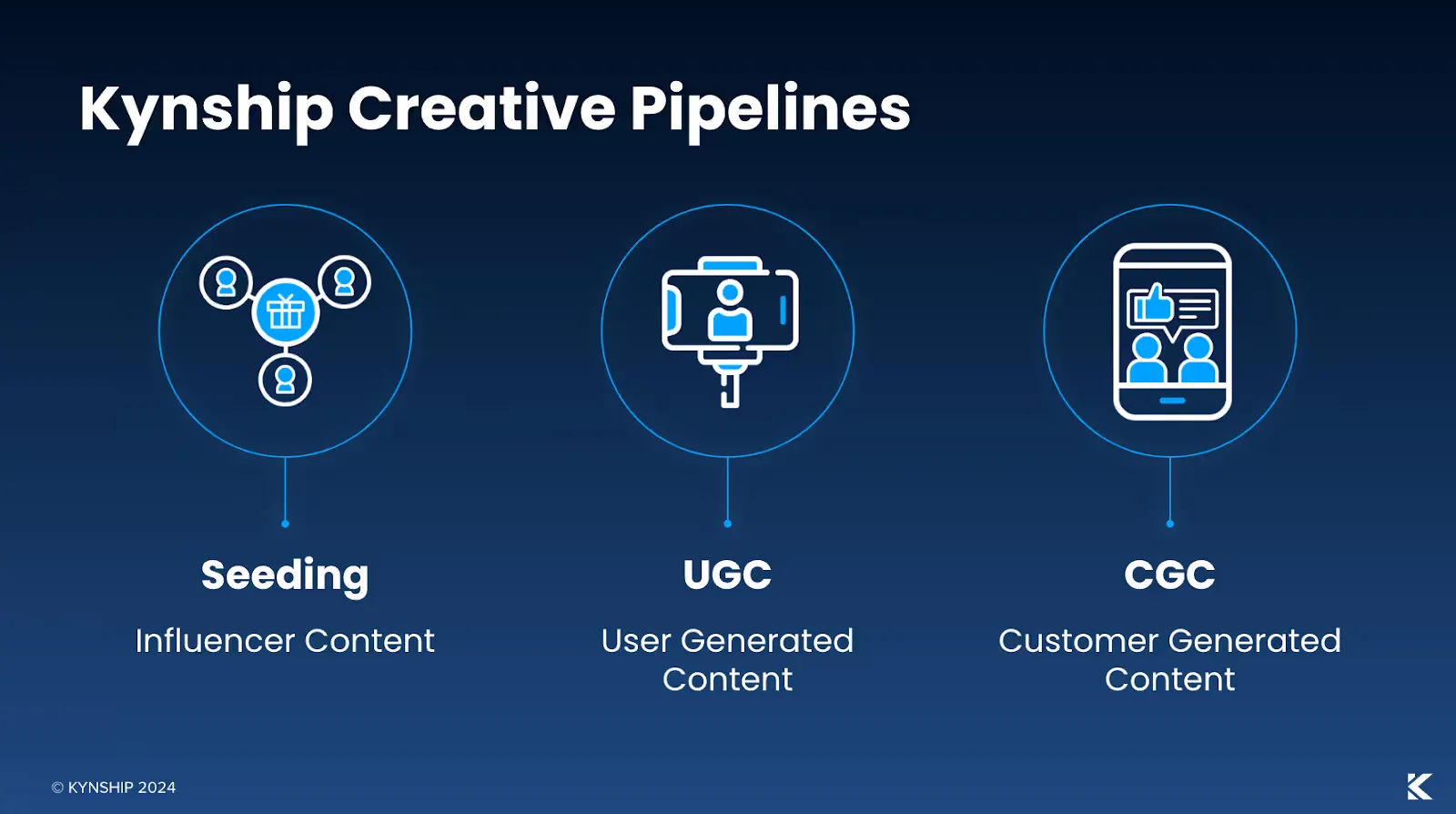
We don’t treat this content as just ad inventory. Because the same content that converts in the ad account—customer testimonials, creator demos, influencer walkthroughs—is also the most effective social proof you can put on a product page.
When that content lives on your PDP in addition to your ad account, it does double duty: the ad drives the click, and the same authentic voice closes the sale on the page.
Take Create Wellness, for example. We seeded 1,000 influencers and netted 350 unique organic assets for them—content that fed both the ad account and on-site social proof. It looks and feels like real people talking about their product, because it is.
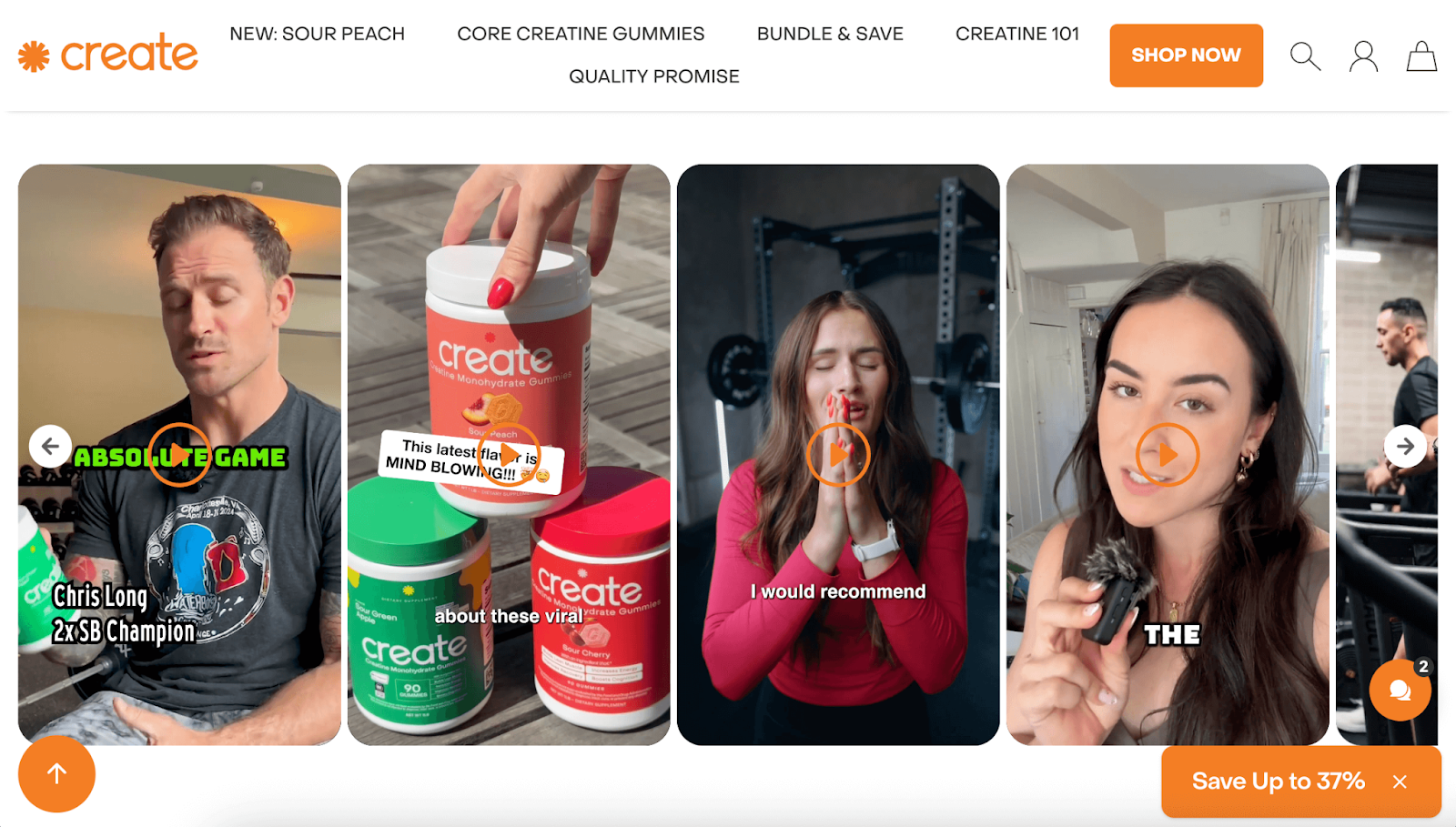
Related reading: Learn how we helped Create Wellness increase new customer revenue by 263% and reduce CAC by 48%.
Tarte Cosmetics also layers IGC across their PDPs so shoppers see real creator content alongside the product—not just brand photography. The proof feels native to the page rather than bolted on—and that's what builds the kind of trust that actually moves CVR.

If your creative pipelines are generating hundreds of authentic assets a month and none of that content lives on your site, you’re sitting on a conversion lever you haven’t pulled.
B. Structure PDPs for persuasion, not just product specs
For brands with few SKUs, build AIDA-structured product pages that lead with the pain point, not the product—hooking with a problem, introducing the solution, layering proof, and closing with a clear CTA.
Black Girl Vitamins, for example, opens with “50% of Black women experience harsher menopause symptoms.” That’s attention.
Then they introduce their supplement as the solution, build desire through doctor-backed credibility and customer testimonials, and close with a clear CTA. This structure gives more room for storytelling and trust-building than the standard “image left, details right” PDP layout.
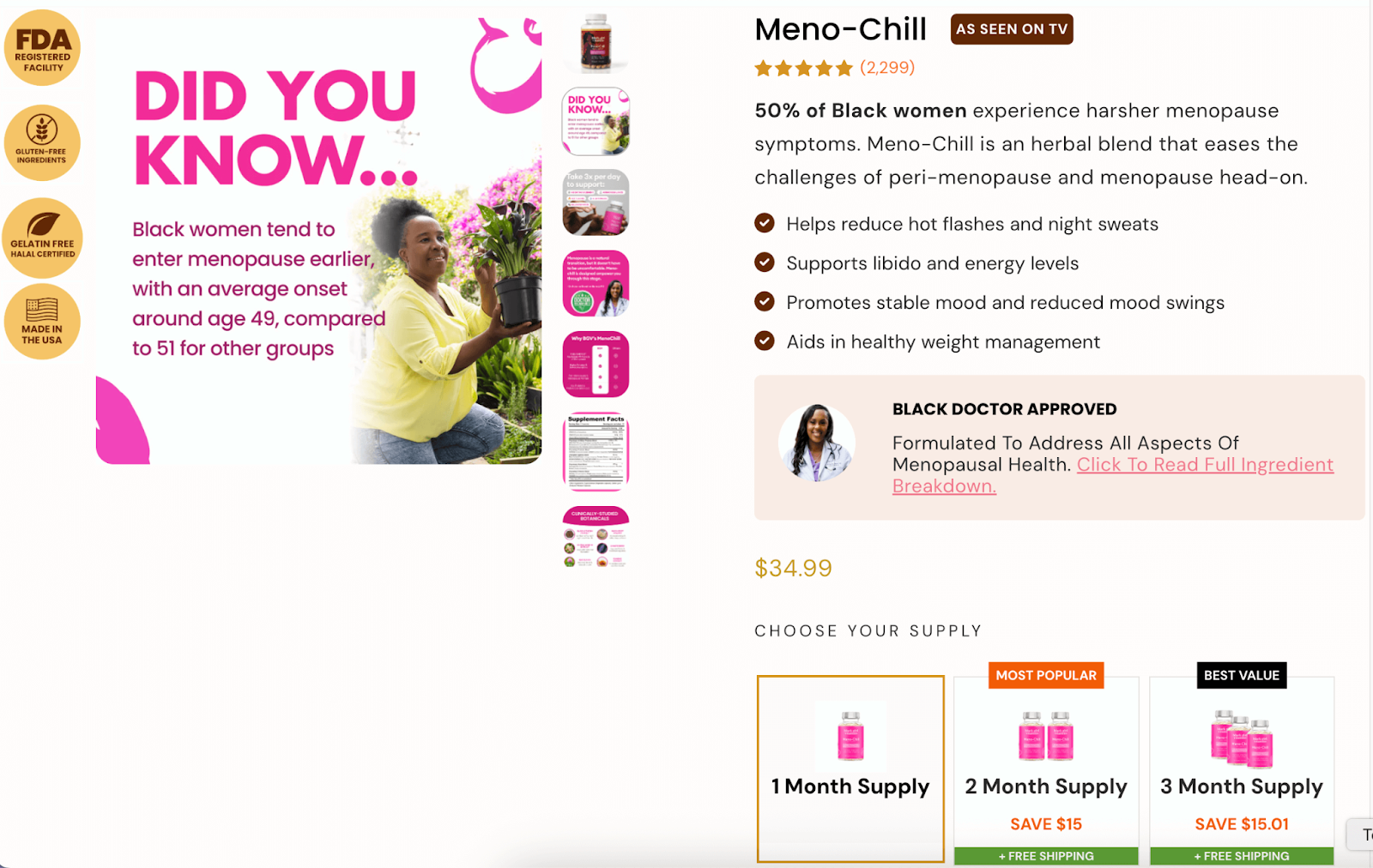
The AIDA structure is specifically worth A/B testing against your current pages for paid traffic—because paid traffic arrives with a specific expectation set by the ad, and benefit-driven pages meet that expectation more effectively than catalog-style pages.
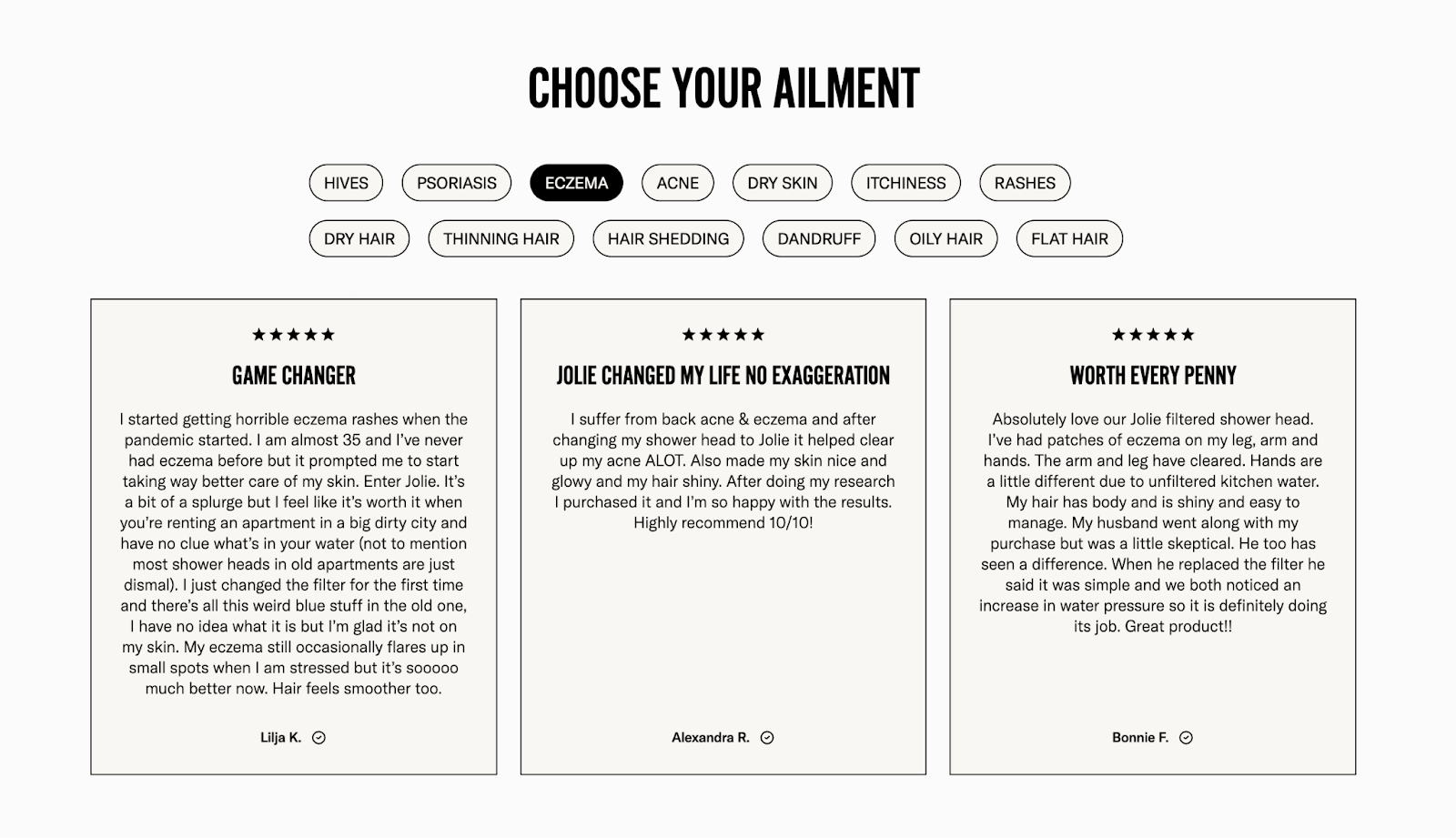
Jolie Skin takes a different approach that's equally effective: their reviews are filterable by concern, so buyers see proof relevant to their specific problem. That specificity converts consideration into purchase.
The Bottom Line
Every review, every piece of UGC, every customer testimonial reduces the persuasion burden on your ads, which translates to lower effective CAC per session.
The brands running on our creative pipelines aren’t just using creative assets to win in their ad account; they’re also building a library of social proof that compounds across their entire site.
Constraint #3: AOV Ceilings That Limit Allowable CAC
Most brands obsess over CVR and ignore AOV.
But AOV is a direct lever over how much you can afford to spend on acquisition. Higher AOV means more margin dollars per transaction, which widens the band your cost controls can operate in.
When AOV is flat, that band is fixed—and it constrains how aggressively your forecast allows you to acquire customers, regardless of how well your creative or media buying is performing.
Revenue per session (RPS) is the metric that captures both sides: CVR × AOV. Optimizing one without the other is working with half the equation.
What This Costs You
You hit your CVR targets, but can’t scale spend because the ROAS will fall apart. Your traffic does convert, but growth stalls and you think you need to add new channels to the mix (spoiler alert: you don’t). You just need a higher revenue per visitor.
If your AOV is $60 and your financial model caps CAC at $20, Meta can only buy traffic within that cost band.
Push AOV to $75 (while maintaining margin) and that same conversion rate now supports a higher allowable CAC—giving the algorithm more auction flexibility, expanding reach, and unlocking spend without sacrificing margin.
How We Approach This at Kynship
At Kynship, we aim to max out the ad account. And if that doesn’t happen with creative wins, we add new offers into the mix.
A. Engineer your offers around unit economics, not gut feel
We don’t default to “10% off” popups and static bundles because that’s not a strategy.
We don’t launch offers unless the unit economics already support them. Before we build any offer, we audit four variables:
- What it actually costs to deliver the order (not just COGS—fulfillment and shipping change the math significantly when you add a second unit)
- How predictable the customer’s basket is (hero SKU brands operate completely differently from high-permutation catalogs)
- What the LTV profile looks like (which determines whether you can afford to be aggressive on the first order or need to be profitable immediately)
- What customers are already doing without being prompted (if a meaningful percentage already buy two units, the offer should amplify that existing behavior, not invent a new one)
These four variables determine whether the right move is a subscription bundle, a threshold spend offer, or an aggressive BOGO—and what CAC target each offer needs to hit independently.
And once an offer works, embed it into email, SMS, and retention flows. Offer testing can be a business-wide growth driver, not just a CRO tactic.
B. Different business models need different offer architectures
We've seen this play out across dozens of accounts:
- For a CPG brand with a dominant hero product and strong repeat purchase data, we built a subscription offer with a free gift attached. The LTV data proved the gift paid for itself within the first repurchase cycle, and the subscription lock-in created predictable revenue that made the whole forecast more reliable.
- For a jewelry brand with thousands of SKUs and almost no repeat purchase behavior, we went the opposite direction—a simple “Spend $100, Get a Free Gift” threshold. No complex bundles or subscription pitch. Just a mechanic that forced AOV high enough on the first order to cover acquisition cost, because there wasn’t going to be a second order to subsidize a loss.
- For seasonal brands, we use high-margin products to boost sales during the slow period. For example, we ran an "Buy 4, Get 4 Free” offer for Southern Scholar during a dead summer—which sounds like margin suicide until you look at the COGS. The product was cheap enough to deliver that the offer unlocked scale in a month where spend would've otherwise flatlined, and overall profitability still improved by 10 points.
The point isn't to copy any of these specific offers. It's that the right offer is always a function of your unit economics, not a creative decision. We cover the full framework in detail in our ecommerce growth playbook.
C. For high-SKU stores, optimize collection pages for specificity
If you’re a store with a high number of SKUs, you’re likely directing ad traffic to a collection page rather than a specific PDP. But even here, your collection page needs to match the ad.
For example, Marsh Wear runs outerwear ads that land on an outerwear collection, not “all men's products.”
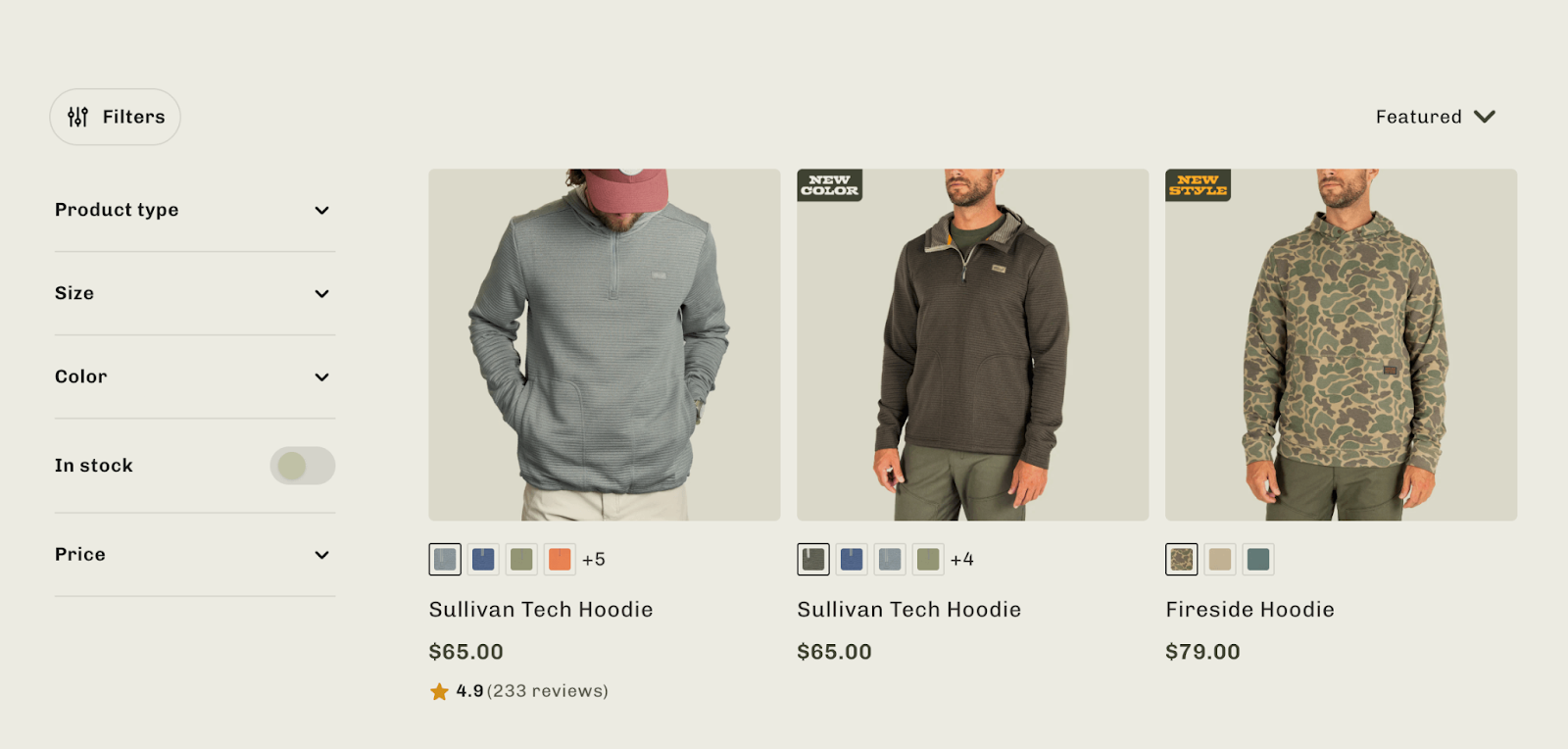
That specificity reduces decision fatigue and increases basket size.
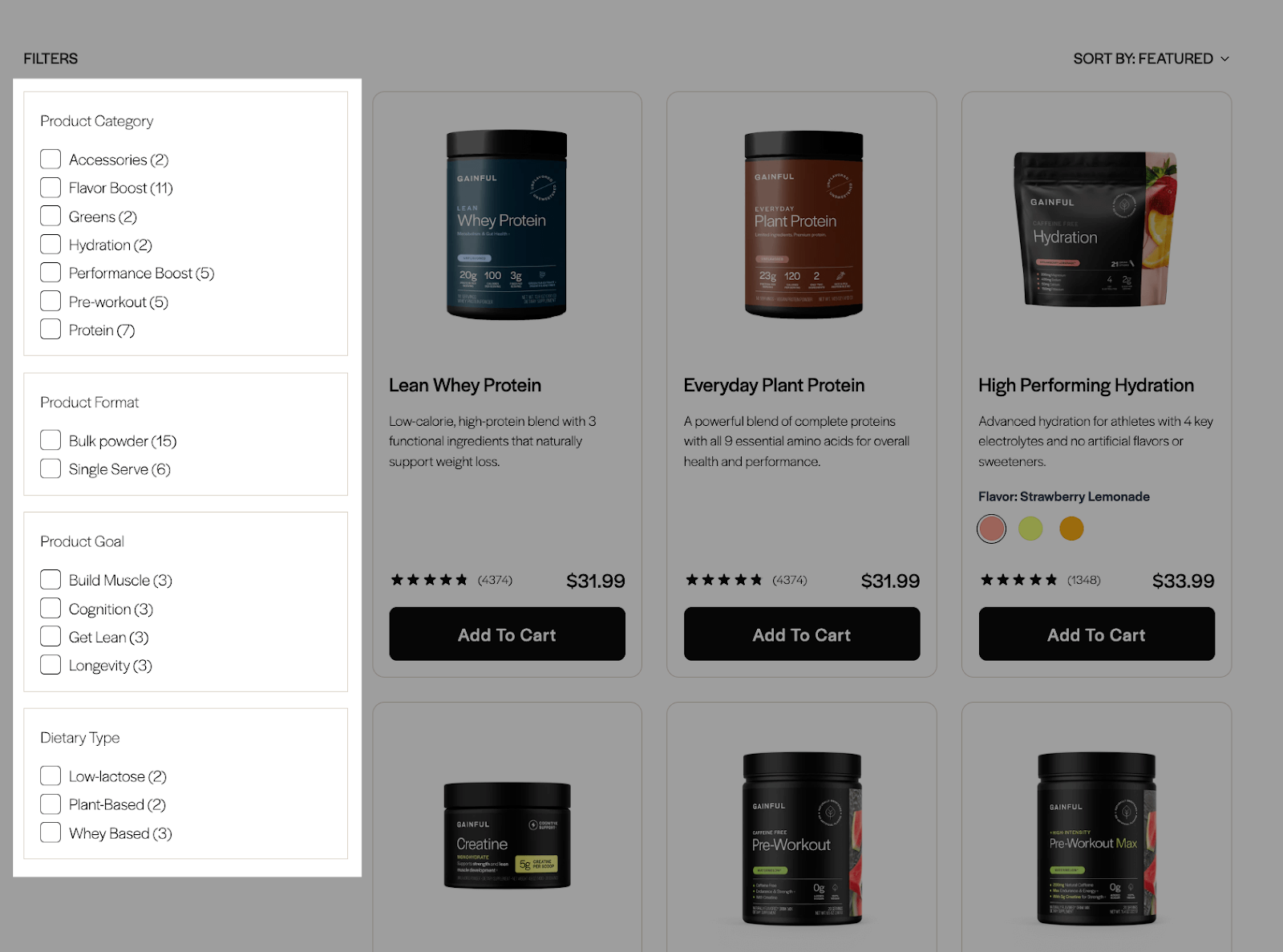
Another thing to remember is to optimize collection page filters for how buyers actually shop, not how you organize inventory. Useful filters reduce friction and help buyers find higher-intent matches faster. Gainful offers filters by “product goal” for protein powders, for example.
Pro tip: For collection pages, infuse testimonials that are about your brand as a whole—not any specific product. Something as simple as “over 100k+ customers served” provides trust without anchoring to a single SKU.
D. Embed upsells and cross-sells at every conversion point
You’re already aware that every cart and checkout should include an upsell or cross-sell. But the question isn’t whether you have upsells—it’s whether they’re calibrated to your unit economics.
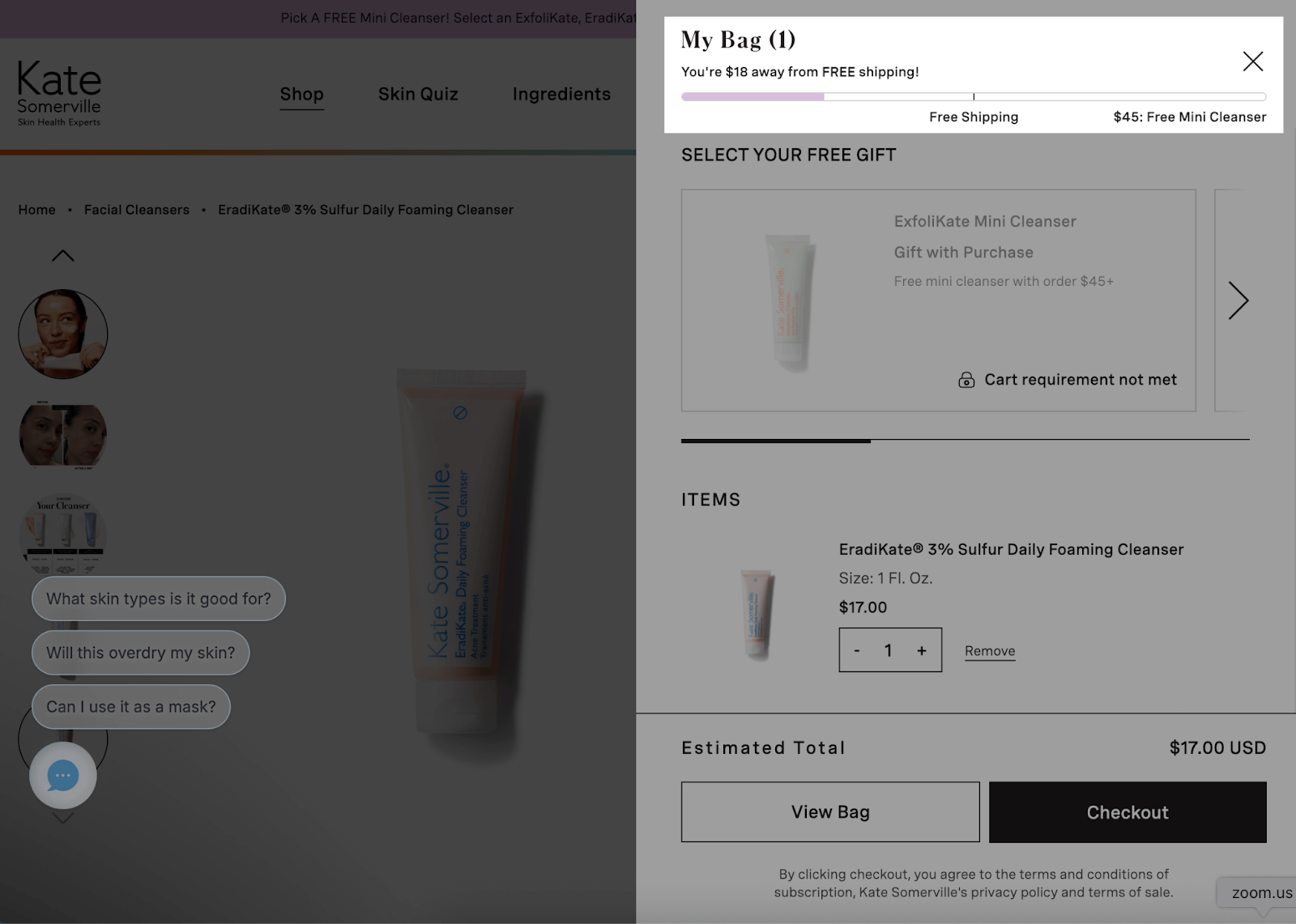
Kate Somerville uses a progress bar showing how far the cart is from free shipping and a gift—that threshold mechanic directly pushes AOV.
Kyte Baby embeds “items that go well together” on PDPs and makes bundling frictionless.
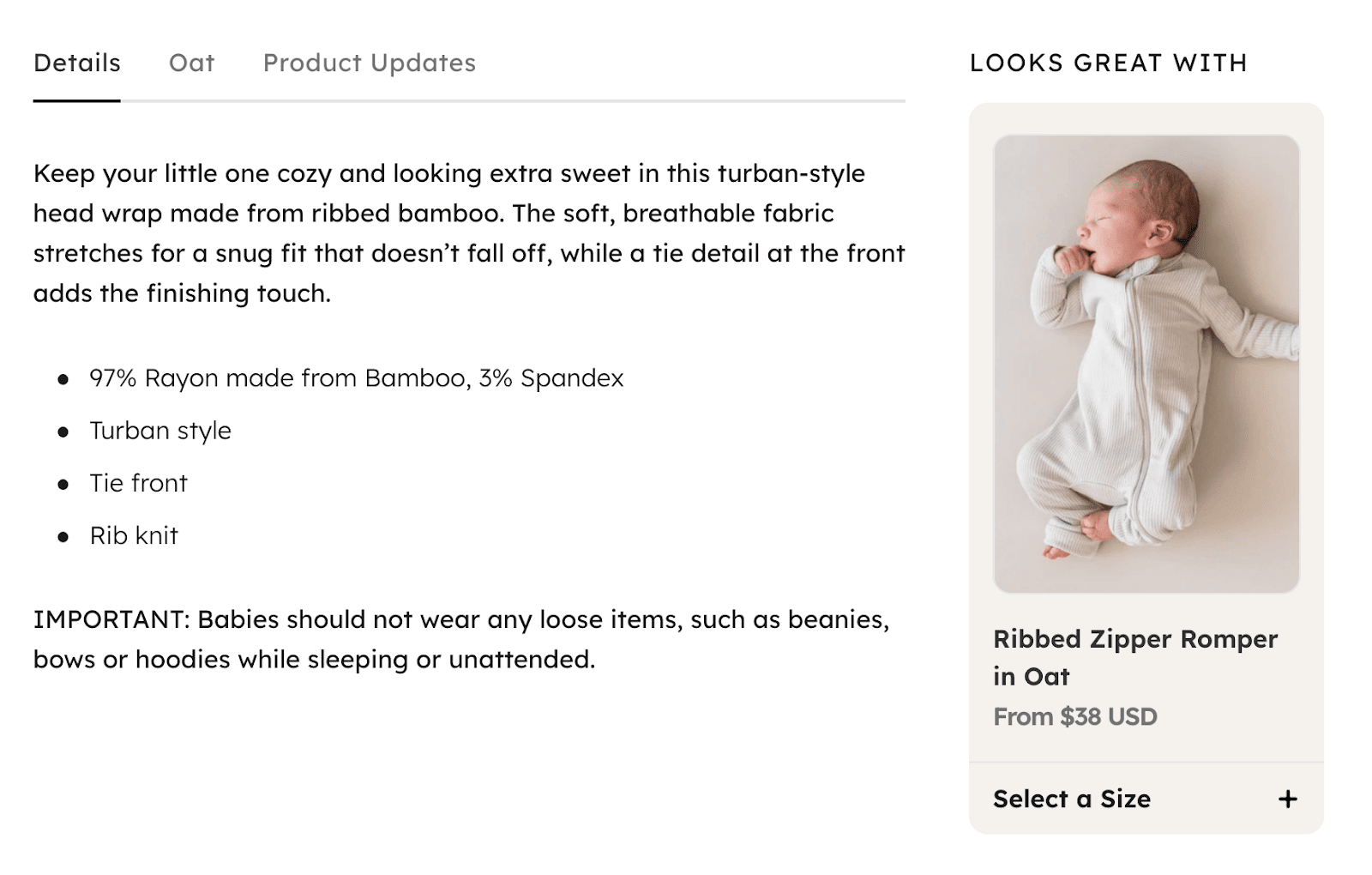
Check your analytics for products that customers frequently buy together and turn those natural pairings into bundles. A tool like Upsell Plus makes it easy to embed these upsells directly into the site experience without adding friction.
The Bottom Line
Focusing solely on conversion rates is short-sighted when you could be maximizing the overall profitability of each customer visit.
A 0.5% CVR improvement is good. A 0.5% CVR improvement combined with a $15 AOV lift changes how much spend your forecast can support. That’s the difference between a site that converts and a site that scales.
Test your offers with the same discipline you apply to creative. Pricing, bundling, subscription mechanics, and thresholds all change contribution per order, which changes allowable CAC.
Sometimes a subscription model expands payback tolerance. Sometimes bundling lifts AOV enough to raise your CAC ceiling. Sometimes a threshold offer pushes revenue per session into a range that finally unlocks scale. You won’t know which lever moves your spend capacity until you test them independently.
Constraint #4: Structural Friction That Depresses CVR at Scale
When performance dips, the instinct is to blame creative.
And sometimes that’s right. Creative fatigue is real. Very few ads last long enough to justify a massive upfront expenditure. At Kynship, we’re producing over 3,000 high-converting ads per month across our client base for this exact reason.
But sometimes the creative is doing its job—driving qualified clicks—and the site is failing to convert them. If you don’t separate creative performance from site performance, you’ll keep cycling assets to solve a problem that lives downstream.
What This Costs You
You’re testing 30+ new creatives per week and rotating through hooks and angles on schedule. But blended CVR isn’t improving. Cart abandonment remains stubbornly high. CPA keeps climbing.
The algorithm is finding buyers, but your site is losing them.
This is a common misdiagnosis in DTC. You keep investing in creative production to deal with a problem that creative can’t solve, while the actual bottleneck compounds.
How We Approach This at Kynship
We audit behavior by cohort (paid vs organic, high-value vs. low-value visitors, etc.) to identify where revenue is leaking.
A. Separate the variables—and use isolated environments to do it
Segment your site analytics by traffic source. Paid traffic from a high-performing creative should convert at a predictable rate. If CTR is strong but on-site CVR is declining, the problem is the page, not the ad.
Your highest-value traffic segments—retargeting, warm audiences, branded search—should have meaningfully higher CVR than cold prospecting traffic. If the gap is narrower than expected, your site is underperforming for the traffic that should be easiest to convert.
Instead of overhauling your live site based on a hunch, you can also spin up isolated landing page variants and send a slice of your paid traffic there. You get clean data on whether the page is the problem without disrupting the campaigns that are currently working.
If the isolated variant outperforms, you’ve confirmed the bottleneck is downstream of the ad. If it doesn’t, you know the creative actually does need refreshing. Either way, you’ve stopped guessing.
B. Audit friction by looking at scroll depth and engagement correlated with conversion
Check where paid visitors drop off. Is the trust content below the fold? Is the offer unclear on mobile? Is the CTA buried beneath content nobody reads?
Use revenue-attribution heatmapping (Heatmap does this specifically for ecommerce) to understand which elements on your site actually drive revenue and which are just taking up space. When you have too much information on your site, all you do is confuse buyers.
C. Build a site testing cadence that mirrors your creative testing cadence
You wouldn't run the same ad for six months. Don’t run the same landing page for six months either.
At Kynship, we A/B test every creative, copy, and content we receive—regardless of how we feel about it. The reality is, there might be limited overlap between what you think would work and what would actually work.
Apply the same discipline to your site. Test offers, layouts, trust placement, and CTAs on a regular cycle. Let data drive decisions, not judgment.
The Bottom Line
Creative fatigue is real. But it’s also a common misdiagnosis for site-level conversion problems. Before you cycle another round of assets, ensure your site is doing its job.
The brands that scale efficiently separate these two variables and optimize both—in the same system, against the same financial targets.
Constraint #5: A Forgettable Brand Makes Every Other Lever Harder
This constraint doesn’t show up in your analytics as a single broken metric. It shows up everywhere—as a drag on everything else.
When someone lands on your site from a cold prospecting ad and has never heard of you, your page has to do all the persuasion from scratch. That adds up—not in dollars, but in conversion friction.
Now compare that to a buyer who’s seen your brand three times this week across different creators, recognizes your visual style before they read the headline, and already has a friend who told them about your product. That person converts faster, bounces less, and costs less to acquire—even though they clicked the same ad.
What This Costs You
A forgettable brand translates to a higher CAC across every channel, because your ads are shouldering the full burden of trust-building.
You can see this in the data.
- If your branded search volume is flat while ad spend climbs, your brand isn’t keeping pace with your acquisition
- If your returning customer revenue isn’t growing, your product experience isn’t creating the kind of memory that brings people back without a coupon
- If your warm audience CVR isn’t meaningfully higher than cold, your brand hasn’t created the trust differential that separates recognized brands from unknown ones
How We Approach This at Kynship
We build brand through the same system that drives acquisition—creative pipelines, consistent messaging, and the compounding effect of showing up repeatedly with the same core idea.
A. Anchor everything to one clear idea your customer can repeat
Most brands try to list a random list of adjectives on their site (premium, environment-friendly, clean, etc.) and justify it as their positioning.
But the brands that lower CAC through brand equity own one idea.
- One problem they solve best
- One differentiator that’s authentic and defensible
- One audience they understand better than anyone
If your best customers can’t articulate what makes you different without looking at your website, your brand isn’t built yet. And your site is compensating for that gap with every session.
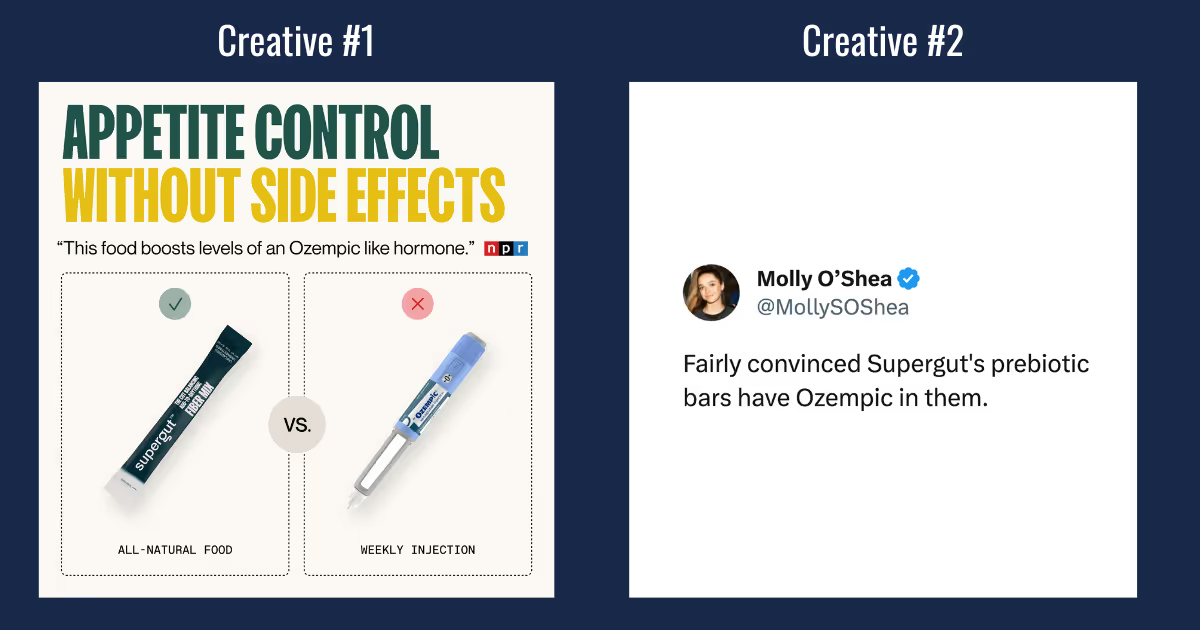
Supergut is a strong example. Their performance breakthrough came from a messaging shift that positioned their prebiotic products as a natural alternative to GLP-1 drugs like Ozempic—combined with our Meta advertising strategy.
That clear angle gave every ad and landing page a sharper story to tell, and together the system drove 799% new customer revenue growth in six months. Here’s what that messaging looked like in practice (also the top-performing creatives):
B. Build distinctiveness through creative repetition, not website redesigns
The fastest way to help your site convert better might have nothing to do with the site’s design.
When your creative pipeline runs a consistent set of angles—the same core ideas, repeated across hundreds of variations, through different creators and formats over months—buyers start recognizing you before they click. They arrive on your site pre-sold, or at least pre-familiar. That recognition does the heavy lifting your PDP was struggling to do alone.
This is where your creative pipelines and your site optimization overlap. The same IGC, UGC, and CGC assets that feed your ad account also build brand familiarity. The same visual patterns that create thumbstop in the feed create recognition on the landing page. The more consistent your creative identity, the less your site needs to persuade from zero.
But timing matters. Don’t try to enforce a distinctive creative style too early. Find the ad patterns that hit your financial targets first. Then layer in brand consistency on top of what’s already working.
C. Let the product experience carry the brand promise forward
Your brand is ultimately the experience people have after they buy. If the product is delivered late, the unboxing feels meh, the instructions are confusing, or support takes four days to reply—no amount of creative consistency will save you.
That gap between promise and delivery creates churn. It also makes acquisition more expensive because the organic flywheel—word of mouth, social sharing, repeat purchases—can’t kick in.
The brands we’ve scaled fastest have tight alignment between what the ad says, what the site reinforces, and what the product delivers.
When all three match, returning customer revenue grows, branded search volume increases, and the cost of every new customer drops—because your existing customers are doing some of the acquisition work for free.
The Bottom Line
At a certain point, creative volume, offer testing, and landing page optimization might start to hit diminishing returns—because you’re still acquiring strangers. Brand is what shifts that baseline—it turns strangers into people who already trust you before they arrive on your site.
When you see branded search volume climbing, direct traffic increasing, warm audience CVR pulling away from cold, and returning customer revenue outpacing new—those are the signals that your ‘brand’ is doing its job. And when those signals are present, every other constraint in this article becomes easier to solve.
No Growth Strategy Can Outrun a Site That Leaks
You can nail your forecast. You can produce 3,000 creatives a month. None of it reaches its potential if the site sitting at the end of every click is bleeding margin.
The five constraints in this article—message breakage, thin trust density, AOV ceilings, misdiagnosed creative fatigue, and weak brand—aren’t always blatantly obvious. They show up as a blended aMER that drifts slowly in the wrong direction, as a spend ceiling you can’t seem to push past, as a forecast that looked right on paper but never quite materializes.
Hold your site accountable to the same standards as your ad account: measured against financial targets, tested on a regular cadence, and held accountable to the same aMER and contribution margin goals that govern every other part of your growth system.
Start with whichever constraint is costing you the most. Measure it. Fix it. Then move to the next one. That’s how compounding site performance works, not through a single overhaul, but through the same disciplined iteration that drives everything else in a well-run DTC business.
At Kynship, we help DTC brands between $2M–$100M drive profitable new customer growth—from the forecast to the creative scaling to the conversion. If your site might be the thing capping your scale, book a call and let's look at the numbers together.
We also break down strategies like these every week in Cut the CAC—our newsletter for DTC founders who want to read what’s working in ecommerce right now.
.png)
How to Scale UGC and Influencer Ad Creative for DTC Brands
Learn how DTC brands can scale ad creative with influencer seeding, UGC creator ads, and customer-generated content—and build a pipeline for profitable growth.
How to Calculate Target CAC and aMER for DTC Brands
Learn how to calculate target CAC and aMER using your P&L, contribution margin, and profit goals before scaling paid advertising.
Bi-weekly tips to reduce your CAC
Join thousands of DTC operators and subscribe to Cut the CAC for insights from the Bottom Line Podcast and Kynship's growth strategies.



We use cookies to optimize our website and your experience with Kynship. But, like our democracy, you're in control. View our Privacy Policy for more information.

Privacy is important to us, so you have the option of disabling certain types of storage that may not be necessary for the basic functioning of the website. Blocking categories may impact your experience on the website. More information